Category Archives: Loved it

The Unknown Known – Director, Errol Morris

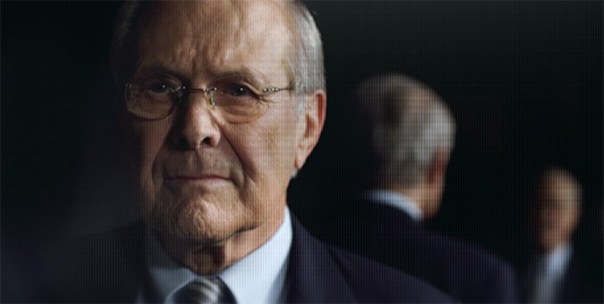
Ten years ago Errol Morris made a film called The Fog of War which I saw at TIFF and thoroughly enjoyed. It focused on Robert S. McNamara, the Secretary of Defence for Presidents Kennedy and Johnson during the Vietnam War. It was basically an interview for nearly 90 minutes that held your attention riveted as he defended and reflected on his actions during one of the most unpopular wars in US history. This film uses the same technique to address the actions of Donald Rumsfeld who served as Secretary of Defence for George W. Bush during the Iraq war and the War on Terrorism. Whatever one thinks of these two men there is no question that they are immensely intelligent and believed in what they did but they were not ideologues – they were bureaucrats of the American Empire. One may wonder if they are lying or telling the truth or even whether they are ultimately evil men responsible for the death, torture and displacement of hundreds of thousands of Americans, Vietnamese and Iraqis. But I am not sure those are the right questions to ask. To call them evil or put the blame for America’s actions entirely on them is unfair and distorts the reality of an immense power exerting its dominance over the world. Still they were the ones to implement the policies of power and these two films are treasures that provide an insight into the world we live in and the role of the US in defining our history the very personal eyes of two influential men. An interesting question at the end of the film asked during the Q and A with the director: Do you (Errol Morris) think he (Rumsfeld) was lying to you? Morris answered by a quote from his movie Tabloid: If you tell a lie often enough, you may eventually come to believe it yourself.

Finding Vivian Maier – Directors, John Maloof and Charlie Siskel

Sometimes you get to see some great films at TIFF and with Mandella and 12 Years a Slave I definitely have but sometimes it’s the surprises that make the festival so much fun. Today I got that surprise in the documentary Finding Vivian Maier. We were the first public audience to see the film and it was unexpected, entertaining, stunning, fun, engrossing…. Well I could go on but needless to say I really enjoyed it and I can’t recommend it more. This film starts with Director discovering a box of several thousand film negatives at an estate auction in the hope of finding some historical photos of Chicago. Instead he uncovers part of what will turn out to be an enormous archive of photographs by a brilliant amateur photographer who had recently passed away having lived a reclusive life as a nanny and domestic worker. He sets out to collect and display her works but also to find out who she was, what motivated her, who knew her and why she was never discovered until his accidental find after she had passed away. The film documents the hunt for Vivian Maier as well as portraying her work. It is one of the best documentaries I have ever seen and the story is completely captivating. Read up on Vivian and look for her photography and definitely see this movie as soon as you possibly can.

Palestine Stereo – Director, Rashid Masharawi

As I noted in my review of 12 Years a Slave I hurried to see this movie arriving just in time to find the escalator to the theatres broken and only minutes to get to cinema 14. Puff puff, I made it and it was really worth the effort. I do not think this movie will win any awards but not because it is not an charming and important film. The story is about two brothers living in Ramallah on the West Bank in occupied Palestine. The elder brother’s apartment block was bombed by the Israeli military to kill some terrorists but the collateral damage was that his wife was also killed and his younger brother was left deaf and dumb from the experience. Together they decide enough is enough and they work to raise $10K to fund emigration to…Canada. They raise the money by working as sound engineers for everything from weddings to government speeches to protests by Hamas or Hezbollah who however will pay them. In the course of raising the money they of course come to see that running away to Canada is ultimately no solution. The reasons to stay are multiple including family, love, politics and just helping their fellow Palestinians get by. It is a light film about a serious issue. I couldn’t help thinking and learning how hard it is to even think of emigration from your home. The other important message which the director emphasized to us in the Q and A afterwards was that most Palestinians are not interested in war or killing or politics (he makes wonderful fun of the Palestinian politicians) but are just people wanting to get by and be left alone. The sad thing is that the country has been divided since 1948 when the state of Israel was founded and war and separation is all they have known for over 60 years. I lived in Israel in the 60’s and we were friends with many Jews born in Palestine before the State of Israel was established also sometimes called Sabra. I remember looking at the Old City of Jerusalem with a Sabra friend of my father’s who pointed across what was then the border with Jordan and said that he had many Palestinian friends over there he had not seen in nearly 20 years and he missed them very much. I recommend this movie to anyone who would like to see a very human side to this long conflict.

12 Years a Slave – Director, Steve McQueen

One of the better movies I have seen in a long time and one that I think deserves a nod for Best Actor for the lead Chiwetel Ejiofor and Best Picture. The film is based on a true story of a black free man in 1841 New York who is kidnapped and sold into slavery in Georgia where he suffers for 12 years before being rescued. The story is a horrendous portrayal of the life a slave in the south in the middle of the 19th century and it pulls few punches. It was hard to watch at times but worth the effort in the end. The film focusses on Solomon Northrop played by Ejiofor but has some wonderful cameo performances from Benedict Cumberbach, Brad Pitt, Michael Fassbender, Sarah Paulson, and Paul Giamatti. There is a Canadian connection to this movie. Brad Pitt’s character who ultimately rescues Solomon confronts the plantation owner about his treatment of his slaves and the fact that he even has any slaves. Solomon hears this and asks him where he comes from. Pitt’s character answers that he is Canadian which drew some cheers from my audience. Slavery was abolished in Canada in 1833 when Britain officially outlawed it throughout the Empire. Canada became a haven for blacks who were lucky enough to escape the US. Once freed himself, Solomon Northrop became an advocate for abolition and worked the Underground Railway that brought many freed slaves to Canada. We can’t be too proud of our heritage even now but at least we started down the right path before the US. So this film is highly recommended by your humble reviewer. I had to leave before Steve McQueen’s Q and A unfortunately as I had to race from Ryerson to the Scotiabank Theatre in half an hour to see a film about another oppressed people.

Emperor – Japan/United States – Peter Webber

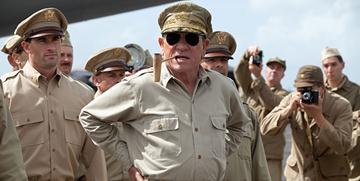
I was not sure about this movie when I picked it out, could it be a routine laudatory picture of General Douglas MacArthur, the ruthless U.S. Commander in the Pacific during World War Two? A kind of homage to the U.S. military? But it did star Tommy Lee Jones and he has a reputation for movies that are somewhat more thoughtful about the U.S. and its politics – In the Valley of Elah and great stories like No Country for Old Men. So I took a chance.

This movie may not be out for a while yet as we saw a version only completed two weeks before it was presented at TIFF. It is a joint venture with Japanese producers and uses American and Japanese actors, and a British Director who honed his skills at the BBC. It tells the story of the start of the American occupation of Japan after the conclusion of the war and specifically the story of whether or not the Emperor of Japan – Hirohito would be tried as a war criminal and likely executed. MacArthur is played by Jones but the main character is one of his officers played by Mathew Fox a relatively unknown actor but who turns in an excellent performance. Fox is charged with presenting MacArthur with evidence one way or the other as to whether Hirohito was complicit in Japan going to war or if he was innocent. The unique quality that Fox’s character brings to the task is that he has knowledge and respect for Japanese culture and a romantic connection with the daughter of one of Japan’s leading generals from before the war. The film follows his attempts to track his lost love down and learn her fate while breaking down the defences around the Emperor to determine his guilt or innocence.

We were lucky to have the director there for a Q and A. Usually by this time in the week everyone has gone home and the TIFF staff do not even introduce the movies. So it was bonus time for us. Webber was very good and was asked some tough questions. The toughest was: “Did he feel the film had a message for us today?”. As I watched the movie I thought how impressive it was that here was a man acting for the U.S. in a country they had just devastated with both conventional and nuclear weapons but who knew and respected its traditions and people. I could not help thinking of the quality of the U.S ambassador to Libya recently killed by an angry mob. This was a great diplomat who won many allies for the U.S. but his death was greeted with ignorance and stupidity by the likes of Romney and Donald Trump (who shamelessly and ignorantly proclaimed that Libya had declared war on America). Here however we see how knowledge and respect wins friends while ignorance and bluster cause resentment. The director answered the question with some trepidation. He asked if the audience was all Canadian and then asked how many Americans were present. About a third of the audience put up their hands. He shrugged and apologized and said he meant no offence but that he wished George Bush had seen this film before he blundered into Iraq. Much applause.

The other question of interest was about the Japanese actors. Many of them spoke English in the film but apparently most had no idea what the words meant. He said he had great respect for them as serious actors. The man who plays Hirohito was in fact a Kabuki actor who usually plays women. Apparently for the very few but important scenes he has in the film, he studied film of the former Emperor and learned his mannerisms and gait and completely absorbed himself in the role. Webber says he is going to be very interested in seeing how audiences in Japan react to the film.

So remember this one. The anticipated release is spring 2013 so they are not looking for Oscars but this is good movie with a worthy message.

A review of the film I read was not positive concluding with (full review at: Playlist ):

All told, “Emperor” delivers a perfectly serviceable wartime movie, with its intentions in the right place. At the same time its harmlessness and adherence to a formulaic storytelling style means the film has no voice of its own and at its worst can feel like the cinematic equivalent of making sure you get enough fiber in your diet. But Tommy Lee Jones at least does make the endeavor worthwhile, pointing toward the better film that could have been made, instead of the one we got.

They got it wrong. Definitely worth your time.

Emperor

Jayne Mansfield’s Car – United States – Billy Bob Thornton

Although I have a real problem with Billy Bob as an arrogant self-important snob, I confess that this movie is actually really good and much of the credit goes to Billy Bob despite being assisted by an amazing cast that includes Robert Duvall, John Hurt and Kevin Bacon. Billy Bob and Robert Duvall were at the screening I attended and there was a Q and A afterward that was good (I guess because no one asked Billy Bob about his musical career – see link below). The film is set in 1969 at the height of the Vietnam War in a small town in Alabama. It focuses on the funeral of the former matriarch of the family who had left Robert Duvall and moved to England where she re-married a sophisticated Englishman played by John Hurt. No one in the US had heard from her in years until she passes away and asked to be buried in Alabama. What ensues is a confrontation of cultures from two families who are equally dysfunctional as the English family brings the body home for burial. Both families have been through war with all the men having served in the First or Second World Wars or in Vietnam and their experiences have taken a terrible toll on them all including particularly the relationships between brothers and fathers. The meeting results in a moving exploration of the impact of war on families and ultimately ends in reconciliation between and within the families.

It turns out to be an autobiographical film in many ways and Billy Bob talked about that in the Q and A. I have to say however that despite this particular piece of work being very good; Billy Bob has lots of other issues to resolve. Like how happy he is to be in a country (Canada) he has described as mashed potatoes without the gravy. Or like his infamous interview with Jian Ghomeshi. The link is here for those who are interested – Billy Bob Thornton and the Q Interview.

So a man with a highly inflated ego appears to have done a great job on this project – he is very good himself as one of the brothers but Robert Duvall is simply amazing, (Oscar worthy again and likely to lose out to something less subtle) as is Kevin Bacon who is one of the most underrated actors in with world. So definitely worth seeing.

Oh – what has Jayne Mansfield got to do with it? Well Mansfield – a sex symbol to compete with Marilyn Monroe but less messed up than Marilyn – died young as well at age 34 in a horrible car accident. Following the American entrepreneurial spirit someone bought the car and toured it around so those with morbid curiosity could see the wreck. The car rear ended a tractor trailer and the top was cut off causing severe head trauma to the victims. Some have said she was decapitated but this is untrue. Nonetheless the tour included a plastic replica of her head on the seat of the car. In one scene in the movie Robert Duvall takes John Hurt to see the exhibit and it is the start of their bonding. Strange yes?

Jayne Mansfield is the mother of Mariska Hargitay by the way – Olivia in Law and Order S.V.U. Save that for your next trivial pursuit game.

Jayne Mansfield’s Car

Love, Marilyn – United States – Liz Garbus

For those of you who have seen and loved My Week With Marilyn starring Academy Award nominated Michelle Williams, this film is for you. For those who haven’t – what is wrong with you? Well if you have any romance in you these two movies are really worth your time. The first is a dramatized version of Colin Clark’s journal of a week spent with Marilyn Monroe and Laurence Olivier on a film set in the UK. That film gives great insight into this tragic figure and her short but brilliant career as the archetypal Hollywood Star and sex symbol. Love, Marilyn is a documentary based on archival footage of her, interviews with all the significant people in her life and a collection of her letters, journals and other writing that has recently been discovered and published. The director had a series of contemporary actors offer their time to read and perform Monroe’s written words including all of the following: Ben Foster, Paul Giamatti, Marisa Tomei, Evan Rachel Wood, Elizabeth Banks, Uma Thurman, Jeremy Piven, Viola Davis, Adrien Brody, Lindsay Lohan, Ellen Burstyn, Glenn Close, Jennifer Ehle, Jennifer Ehle, F. Murray Abraham, Jack Huston, David Strathairn, Janet McTeer, Oliver  Plat , Lili Taylor, Stephen Lang.

It is very effective and evokes some very emotional reactions. One of the major narrators is Amy Green who was her contemporary and closest friend. Amy and her husband Milton often had Marilyn stay with them and they became confessors of a sort for her. We were lucky enough to have Amy Green at the showing to do a Q and A after the film and although she is now elderly and quite frail, she was funny and insightful about Marilyn making it a real treat for us in the audience. For those who may not see what so many others do in Marilyn a few facts. She was born to a single mother, her father leaving as soon as he found out about the pregnancy. Her mother suffered a mental breakdown and Marilyn (then named Norma Jeane Mortenson) was raised in a series of foster homes and orphanages. She survived all that to emerge with a goal of being an actress and she worked tremendously hard at it to great success. Throughout, however, she suffered from insecurity, loneliness and a feeling that she was not worthy of being loved or of loving. This comes out in the journals and letters very movingly. The persona she built and presented to the world was very much a mask but one that she built very carefully and deliberately and put on with purpose. Lee Strasberg recalled a time when he was working with her and she asked to go the powder room. He commented that he should have had a good book with him because her trips to the powder room could take “as long as an elephant’s pregnancy”. Nonetheless about 20 minutes later, when she had not returned, he went and knocked on the ladies room door and she told him to come in. He found her staring at her image in the mirror and when he asked her what she was looking at, she pointed at the mirror and responded, “I’m looking at her.”

The film is full of anecdotes like this that provide insight into an amazing woman who because of her early and tragic death has become an icon that many of her contemporaries like Liz Taylor never achieved. I highly recommend this movie to all.

Love, Marilyn

Great Expectations – United Kingdom – Mike Newell

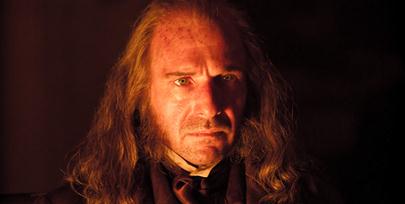
I went into this one with some trepidation. Great Expectations is a huge novel with many characters and a long and winding story but the cast which included Helena Bonham Carter, Ralph Fiennes, and Robbie Coltrane got me hooked. So off to the Elgin with 1500 other movie fans to see what turned out to be the best movie of the week so far. It will take something pretty special to beat this one out. The set design and cinematography evoke Dickens’ London perfectly and the three big name stars are perfect in their roles. Clearly Carter revels in the odd and quirky and she plays Miss. Haversham very convincingly although I am always seeing a bit of the Red Queen or Bellatrix Lestrange behind those eyes. Ralph Fiennes is brilliant as Magwitch and Coltrane is clearly having fun as Jaggers the lawyer. If you saw War Horse then you will know Jeremy Irvine who plays Pip. He does very well with an excellent supporting cast.

Mike Newell was there for a Q and A after the film and I think it was one of the best Q and A’s I have ever seen. He was funny, thoughtful, and gave us great insight into how he was able to collapse this huge novel into two hours. Obviously he cut out some major parts but in the end kept the essence of the story. Newell is an eclectic director with a long track record including Four Weddings and a Funeral, High Fidelity (Exec Producer), Pushing Tin, one Harry Potter film and Prince of Persia. So all over the map but mostly with tongue in cheek. I am guessing this movie has a real chance at some important Oscar nominations. Definitely worth your time to attend.

Great Expectations

Hannah Arendt – Germany – Margarethe von Trotta

Okay – this was worth my whole week at the Festival. I was totally surprised by this film. My postgraduate work was in philosophy and specifically 20th century European philosophy and Jewish existentialist theology (wowzers). I read Hannah Arendt’s The Origins of Totalitarianism and The Human Condition and I thought to learn something about this thinker and writer. However, the book that gained her notoriety and on which this movie is based was her report on the trial of Adolf Eichmann – Eichmann in Jerusalem: A report on the Banality of Evil. So instead of a somewhat academic look at a 20th Century German Philosopher, I was treated to a brilliant dramatic story of most unusual woman who demonstrated great courage and love.

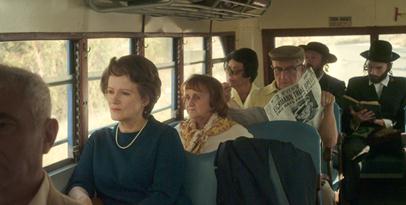
As a Jew who was incarcerated in a detention camp in France in the Second World War and who only escaped to the US by chance she had much at stake when she was asked by the New Yorker Magazine to go to Jerusalem to witness his trial after he was abducted by the Israeli’s from Argentina. She was stunned by the proceedings and by Eichmann himself who came across as not one of the evil geniuses behind the Holocaust but as a minor and very mediocre bureaucrat who was simply following orders. He put the Jews on the trains but it was another department that dealt with them afterwards. He denied any culpability or guilt in the matter. He was just following orders. Once they were on the trains and off to their designated destinations, the rest was up to other departments. The film is a dramatic presentation of Arendt’s time in Israel and her return and the impact of her articles and ultimately her book on her career and reputation. One of the most dramatic aspects of the film is the newsreel footage of Eichmann’s testimony. It lends so much credence to her argument that the most extreme form of evil is ultimately so banal.

While many were upset at her description of Eichmann as a minor and mediocre bureaucrat the statements that got her most in trouble were related to her claim that the leaders of the Jewish communities in Europe were complicit in creating the Holocaust because they counselled their congregations and communities not to resist. This was seen by many to be blaming the victim when in fact Arendt, a Jew and someone who barely escaped being a victim of the Holocaust herself, saw this as just an extension of the totalitarian system and the banality of evil reaching even into the victims themselves.

The acting in this film is phenomenally good and the story compelling and engrossing despite the intellectual argument that flows through and drives the plot. I can’t recommend this film more highly to you all.

Hannah Arendt

Mea Maxima Culpa: Silence in the House of God – United States – Alex Gibney

This film is a documentary that begins with the attempt by four men to confront the sexual abuse they suffered at the hands of a Catholic priest while children at a School for the Deaf in Wisconsin in the 1970’s. It goes far beyond that however as the director suggests this is the incident that opened the door on sexual abuse within the Church and the efforts of the Vatican to hide or deny it. The interviews with the four victims are very moving and this is interspersed with interviews with priests and clergy who either were instrumental in exposing the problem and those who worked to hide it and all those in between. It is a complex and difficult issue to pick apart but the director does a superb job. Chilling and yet intriguing we hear from a Canon law prosecutor/priest who to this day continues to bring charges against the guilty clergy, a Benedictine monk who treats the perpetrators and the victims, a retired priest who once covered up for the guilty, a gay archbishop who tried to intervene but backed away when his own misdemeanours were exposed and on and on. But ultimately this film is about the victims and the courageous fight they still wage to bring the Church to acknowledge its crimes and act with dignity to the victims rather than the priests who committed these crimes against those entrusted to them.

Mea Maxima Culpa