Category Archives: Documentary

No Men Beyond This Point – Director – Mark Sawers

This was the funniest movie of the week. A mockumentary that the director told us was more about mocking documentaries than mocking the topic of the film. Still the topic was great and the film very funny. Filmed in Canada with a Canadian cast and director, the film speculated on a world in which women begin getting pregnant through parthenogenesis or asexually. They just become pregnant without requiring male involvement and worse, at least from the male perspective, all these pregnancies result in female babies. After a few decades men are becoming a smaller and smaller percentage of the population and as no new males are being born, older and older. The film focusses on the youngest remaining man, a 37 year old who is working as a nanny and housekeeper for an all-female household. Among the speculations is that sex becomes something to be refrained from at least in the policies of the female government and a new naturalist religion evolves. Men are forced to live in compounds and the title of the film comes from signs restricting males from leaving their compounds.

The film lacks good scientific background but it uses great documentary style and while you do not laugh hysterically you do chuckle continuously and in a good way. It is a very funny movie. The director was there for a Q and A and was asked some pretty silly questions like why he did not address issues of gay/lesbian sex, his lack of multicultural or racial variety in the cast, the problem of reduced genetic diversity in parthenogenesis etc. It was after all a comedy and a joke and needed to be accepted as such and not as a serious sci-fi film. On the other had he was asked how he came up with the idea and he confessed his starting point was that he wanted to make a movie, he had limited funds so it would be shot in his house, use only 6-7 actors and involve a love triangle. The idea for the movie came from a story he read about komodo dragons who can reproduce without male/female intercourse. He felt bad for the komodo dragon and speculated on this possibility in human populations. Thus a movie is born.

I think this is well worth your time if you can track it down. I suspect it will show up at Hot Docs but not in general release but if you can find it, see it.

http://tiff.net/festivals/festival15/vanguard/no-men-beyond-this-point

This Changes Everything – Director – Avi Lewis

We were lucky enough to be the first audience to see this film. It is based on Naomi Klein’s most recent book about the relationship between climate change and capitalism and is I think her best book in a large opus. The film is directed by her husband Avi Lewis – son of Stephen Lewis and with a long NDP heritage. The movie is different from the book in that rather than focus on political analysis it instead focusses on communities that have been affected by pollution, climate change or corporate nastiness of one kind or another. The film moves from first nations struggles in Canada to save their lands to similar situations in Greece, the US Midwest, India and Germany. It was important in my mind to move from our tendency to use first nation struggles as the lever on this issue and realize that their struggle is really no different from that of people all over the world. Very effective.

At the end of the film we were lucky to have several of the people from those communities present to tell us where their stories have developed. It was a very friendly audience as would be expected and they got a standing ovation for the film and for being who they are. Interestingly the introduction was introduced by 2 vegan activists who held up signs and urged us to stop eating animals in order to save the world. They have a point although I confess I did eat a nice filet mignon that evening. The protestors were ushered off politely amid scattered boos from the audience. It was somewhat hypocritical of the audience however as this crowd would likely have cheered similar protests at a Harper rally but that aside it was a pretty friendly event.

The movie is excellent and everyone who sees climate change as our biggest challenge as a species needs to see it and get on board. The film is hopeful that we will get our act together in time to save ourselves but that is still debatable unless something happens soon. This December there is world conference on climate change that will make or break us I fear. Avi let lose a great Freudian slip at the end. He told us that we need to push our political leaders to make meaningful change at the climate conference which will be held “at the end of the world”. Got lots of laughs before he realized what he had said and cried out “end of the year! End of the year!!

Return of the Atom – Mika Taanila and Jussi Eerola

I chose this movie, the only Finnish movie at the festival this year, mostly because of the topic. It’s a documentary about the 2002 decision to build a new nuclear reactor in a small town in Finland but also the first reactor to be built in Europe since the Chernobyl disaster which occurred in 1986. Since that time of course Germany had shut down all of its nuclear reactors and the fear of another Chernobyl has sent most Europeans down the wind, hydro or solar route to renewable energy sources. Not so in Finland which still generates something like 25 percent of its power from the atom. The building of the reactor has been plagued with delays and a project that was to be completed in 2005 is now scheduled to come online in 2018 at the earliest and has cost over runs that are 3 times the original estimates. All this plus the health concerns of course and the risk of melt downs, earthquakes etc. The film is too long and in Finnish with English subtitles. Sadly much of the story is lost unless you speak Finnish but it is still a very important story. It shows, not what one would expect: namely a town mobilizing to stop government imposing a dangerous new technology but Instead the story of a town oblivious to the dangers or the policy errors or else strongly in support of the economic boon it would bring. Only a handful of locals oppose the project and they are ostracized as cranks and trouble makers. The film makers take the side of the cranks but show inertia of the town in the face of government decisions and the resulting frustration and impotence of the small group in opposition.

The film is promoted as full of humour and presenting the clear lies and machinations of the corporations behind the plan and the dangers of public/private cooperation. However because of the language issues and I think cultural differences between Finland and really the rest of the world, most of the jokes were missed by the audience including myself and at the end there was no applause which is very unusual for a TIFF presentation. I think in part because the audience was not aware the film had actually come to an end until the credits started to roll. It was a very confusing story and presented in a way that did not engage the audience I fear. However, after lots of thought I was glad I had seen it and have thought more about the issues raised in the time since. The scariest thing is the acquiescence of the community to the imposition of the reactors (there are two already there and more are planned) as well as the decision to store the reactor waste nearby the town. It is really not so different from Alberta’s and Canada’s decision to allow the tar sands exploitation. The risks are not dissimilar and the lack of engagement of the communities is much the same. If we can’t wake ourselves up to these issues we are doomed. The humour of the film therefore is hard to react to because it is very black. You have to laugh or you end up crying with the cranks.

Hitchcock/Truffaut – Director Kent Jones

My first film of the festival was this wonderful documentary exploring the films of Alfred Hitchcock. In 1962 Truffaut sat down for a week long interview with Hitchcock to discuss his films and craftsmanship. Truffaut was a huge fan of Hitchcock’s films and believed that Hitchcock was much more than an entertainer but introduced great innovation into film making. The outcome of the interviews was a book that itself has influenced many contemporary directors, several of whom are interviewed in this film about the book, and Hitchcock’s films and legacy. The documentary delves in detail into the making of Vertigo, Psycho and The Wrong Man as well as a wonderful analysis of the Ingrid Bergman and Cary Grant kiss in Notorious. Look it up if you have not seen the movie. At the end of the film you want to get the book, watch all of Hitchcock’s films again, see some of Truffaut’s work and maybe watch this movie again. It was a wonderful tribute, enhanced by interviews with the likes of Martin Scorsese, Wes Anderson, David Fincher and Kurosawa. Perhaps my favourite scene was near the end where photos were taken of the two directors. Hitchcock was having a great time promoting himself as master to Truffaut’s student role. A series of the shots can be seen on IMDb’s website – http://www.imdb.com/title/tt3748512/mediaindex?ref_=tt_pv_mi_sm

National Gallery – Frederick Wiseman, Director

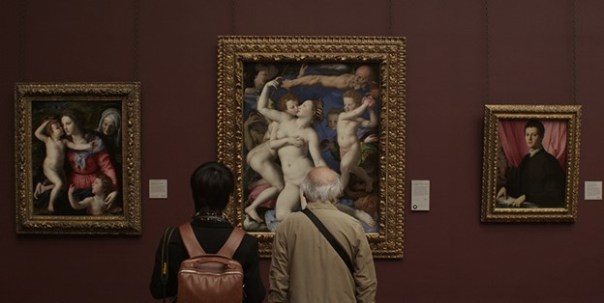
Today we decided to try the rush line and go for tickets to this 3 hour documentary about the National Gallery in London. The director is well known and has been doing docs since the 1960’s. His style is simply to film and let the images and dialogue speak for themselves. There is no narration but after 3 hours you feel like you have had a tour of one of the great art museums in the world. The film takes you through the galleries, offers you short lectures on individual pictures, visits management meetings, goes back to see the work done by restorers and gives you insight into how much thought goes into shows and how they are set up and lighted. Sounds long I know but it is fascinating and well worth your money and your time. Some of the images tied into earlier films including a significant look at a Turner exhibit that tied into Mr. Turner for me at least. The speakers in the film describing the art, the restoring process and the management of the gallery are all excellent. Hard to say too much more but it was really entertaining and I learned a ton. Go see this if you can.

http://www.tiff.net/festivals/thefestival/programmes/tiff-docs/national-gallery

Red Army – Gabe Polsky, Director

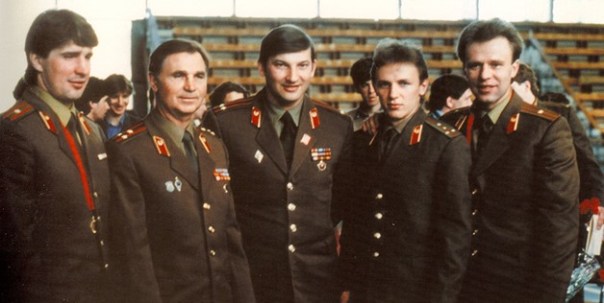
I was not sure what to expect from this movie but being a hockey fan and having grown up with Canada vs the Red Army I was intrigued. Luckily we had a chance to hear the director introduce the movie. He is a first generation American born in Chicago of Ukrainian parents who had grown up in the Soviet Union. He played hockey as a kid in Chicago and was also interested in his Ukrainian origins and this led him to consider making this movie focussed on the incredibly successful and skilled Red Army team of the 70’s and 80’s. The movie is less a hockey movie and much more an exploration of the soul of the Soviet society of the time. The protagonist of the film was Fetisov, likely the greatest hockey player of his time. A defenceman to challenge Bobby Orr as the greatest defensive player ever. Interestingly Fetisov refused to be interviewed for the film until the final day of filming when he agreed to give 15 minutes. This turned into 5 hours and two more subsequent sessions. This saved the movie because he is a tremendously charismatic figure who led the Red Army team as captain and… well there is much more that teaches you why Putin is so successful today and much much more about Russian society and thinking. There is much here to learn about hockey, why the Red Army team was so successful, how oppressive the regime was as well as the team leadership itself. There are some amazing lines from the interviews with players, former KGB agents, coaches and others. The one coach Tikhonov was particularly brutal and at one point one of the team members tells the interviewer that if he had to have a heart transplant he would want Tikhonov’s heart because he never used it. The film is full of lines like this and even if you don’t know or like hockey you will love this movie. It is simply a brilliant documentary and well worth your time. Highly recommended to all.

http://www.tiff.net/festivals/thefestival/programmes/tiff-docs/red-army

12, 12, 12 – Director, Harvey Weinstein Guest blog post by Cal Gutkin


“12,12,12” – the documentary of the Concert to raise funds for the victims of Hurricane Sandy  was great. It was the World Premiere of the film and was attended by Harvey Weinstein,the noted Hollywood producer who produced the concert and the movie. George Stroumboulopoulos led a very entertaining and insightful post film Q and A with Weinstein and 4 of the 5 other main producer/ directors(the only one missing was Paul McCartney who sent regrets at the last minute. The big screen and Dolby surround sound made both the scenes of the devastation of Hurricane Sandy and the on stage performances during the concert something special.It was a real treat to see and hear some very memorable musical moments offered by many including Bruce Springsteen, McCartney,( backed up by Dave Grohl( Nirvana )and the Foo Fighters, Pete Townsend and The Who, Pearl Jam, R.E.M., Coldplay, Billy Joel, Alicia Keys, The Rolling Stones (although Keith Richards and Ron Wood look like death warmed over, they can still play and rock hard – and it’s incredible to watch Jagger perform and  move on the stage like someone 50 years younger – yes 50! What a role model he is for some of us 😉
There is also a hilarious rendition if Leonard Cohen’s classic” Hallelujah! – performed by Adam Sandler (a performance which, IMHO, exceeds anything he has ever done in the movies)
If you get a chance be sure to see this movie – it’s worth it.

The Last of the Unjust – Director, Claude Lanzmann, Guest blog post by Cal Gutkin


The Last of the Unjust was too long (4 hours) but excellent – a riveting history of the Nazi ghettos and the ruthlessness of Eichmann and the Gestapo- but it differs from most accounts in that the story is told by and focused not on the Nazis or their victims who did not survive – but on one who did – Rabbi Benjamin Murmelstein the chief Rabbi of Vienna when the Nazis occupied his city and destroyed every temple and every torah or other valued Jewish religious article they could find . Murmelstein was sent to a ghetto where he was appointed by the Nazis as   the “Jewish Elder”. the Nazis did this as one of many acts to camouflage what was really happening by making it appear as if their victims were really in charge of their own destinies in these ghettos when in reality these were nothing more than temporary stopovers for Jews then being packed up and herded onto trains taking them to the gas chambers . Murmelstein claimed he actually saved many lives by using a strategy that included making it seem he was befriending and assisting Eichmann and other Gestapo in some of their tasks and by carrying out many Nazi orders. While thousands were still exterminated, he says the need for his services and the trust that many of the Gestapo placed in him allowed him to spare the lives of many who would otherwise have perished. The price he paid for this was that he was seen by many of the Jews in the ghetto as being in collaboration with Eichmann and others in the Gestapo . He was the only Jewish Elder to not be killed by the Nazis and when he survived the war he had war crimes charges brought against him by other ghetto survivors. Although the courts exonerated him, his guilt remained steadfast in the minds of many of the ghetto survivors and the families of thousands who died. His story, documented  in this French subtitled film created by the producer/ director / narrator who is also a French Holocaust archivist , is an important addition to the history of WWII and the holocaust. But it should and could be edited to around 150 minutes max.

Cal Gutkin.

The Unknown Known – Director, Errol Morris

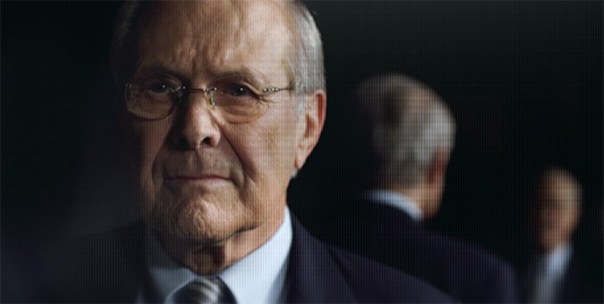
Ten years ago Errol Morris made a film called The Fog of War which I saw at TIFF and thoroughly enjoyed. It focused on Robert S. McNamara, the Secretary of Defence for Presidents Kennedy and Johnson during the Vietnam War. It was basically an interview for nearly 90 minutes that held your attention riveted as he defended and reflected on his actions during one of the most unpopular wars in US history. This film uses the same technique to address the actions of Donald Rumsfeld who served as Secretary of Defence for George W. Bush during the Iraq war and the War on Terrorism. Whatever one thinks of these two men there is no question that they are immensely intelligent and believed in what they did but they were not ideologues – they were bureaucrats of the American Empire. One may wonder if they are lying or telling the truth or even whether they are ultimately evil men responsible for the death, torture and displacement of hundreds of thousands of Americans, Vietnamese and Iraqis. But I am not sure those are the right questions to ask. To call them evil or put the blame for America’s actions entirely on them is unfair and distorts the reality of an immense power exerting its dominance over the world. Still they were the ones to implement the policies of power and these two films are treasures that provide an insight into the world we live in and the role of the US in defining our history the very personal eyes of two influential men. An interesting question at the end of the film asked during the Q and A with the director: Do you (Errol Morris) think he (Rumsfeld) was lying to you? Morris answered by a quote from his movie Tabloid: If you tell a lie often enough, you may eventually come to believe it yourself.

Finding Vivian Maier – Directors, John Maloof and Charlie Siskel

Sometimes you get to see some great films at TIFF and with Mandella and 12 Years a Slave I definitely have but sometimes it’s the surprises that make the festival so much fun. Today I got that surprise in the documentary Finding Vivian Maier. We were the first public audience to see the film and it was unexpected, entertaining, stunning, fun, engrossing…. Well I could go on but needless to say I really enjoyed it and I can’t recommend it more. This film starts with Director discovering a box of several thousand film negatives at an estate auction in the hope of finding some historical photos of Chicago. Instead he uncovers part of what will turn out to be an enormous archive of photographs by a brilliant amateur photographer who had recently passed away having lived a reclusive life as a nanny and domestic worker. He sets out to collect and display her works but also to find out who she was, what motivated her, who knew her and why she was never discovered until his accidental find after she had passed away. The film documents the hunt for Vivian Maier as well as portraying her work. It is one of the best documentaries I have ever seen and the story is completely captivating. Read up on Vivian and look for her photography and definitely see this movie as soon as you possibly can.