Category Archives: Documentary

Black Code, Director — Nicholas de Pencier

blackcode_03

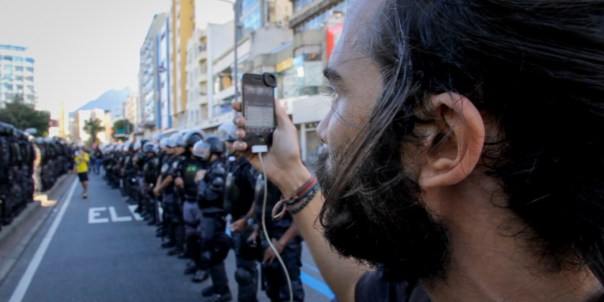
Black Code is a Canadian documentary about the Internet and mass surveillance. The film makes it clear that it is not all bad but it is definitely not all good either. The Internet and access through multiple devices including phones, tablets and PC’s has changed how much we know about what is happening in the world. The film takes images from exiled Tibetans and riots and protests in Brazil. Police brutality and spreading the truth about oppression in Tibet are quickly available around the world. At the same time however, those who want to hide from their crimes: police and oppressive regimes, use the same technology to find and arrest or do much worse to the protesters. The spread of this kind of surveillance has of course spread to the whole world as revealed by Edward Snowden and Julian Assange. The film being Canadian focuses on Ron Deibert the director of the Citizen Lab at the University of Toronto’s Munk School of Global Affairs. This small group of hacktivists has been responsible for monitoring the use and abuse of the Internet. I liked the movie very much and learned a great deal. When I compare it to Werner Herzog’s empty and pointless Lo and Behold there is nothing to say. This film is just far far superior, far far more intelligent, far far more insightful, just far far better. There – got another dig in at one of the world’s most overrated directors. So if you want to learn about the Internet and its impact on society see this good Canadian Doc when it is released later this year.
I Am Not Your Negro, Director – Raoul Peck

iamnotyournegro_01

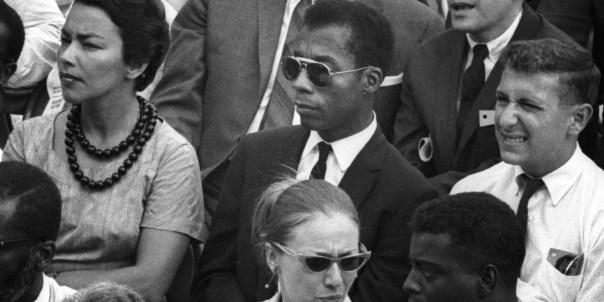
I saw this film on the same day that I saw Denial so I had a day of films about racism and how it is dealt with in our society. Both received well deserved long standing ovations from large audiences. I Am Not Your Negro however was a documentary based on the work of James Baldwin his contribution to the civil rights movement in the 60’s and his relationship with Medgar Evers, Malcolm X and Martin Luther King. It documents his reaction to their murders, and describes how he perceived his own role in the battles of the time. The director also explores the themes of the 60’s struggles with the current struggles and looks in depth at the ongoing racial struggles in the US. It is a complex film that deserves much reflection. I am not as familiar as I should be with James Baldwin’s writing and thinking and need to correct that deficit. I also want and need to see this film several more times to be sure I get a full understanding of the complexities. We had a chance for a Q and A with the director who is Haitian born. He took ten years to put this film together as he delved into archival footage and Baldwin’s own rich writing. Baldwin had proposed writing a book about the three leaders of the civil rights movement, their conflicts and friendships and their sacrifices. He never was able to complete this project himself but Peck decided his film could be the book Baldwin never wrote. I think he has succeeded and we should all see this film and come to grips with the racism of our society.

Citizen Jane: Battle for the City, Director – Matt Tyrnauer

citizenjanebattleforthecity_01-1

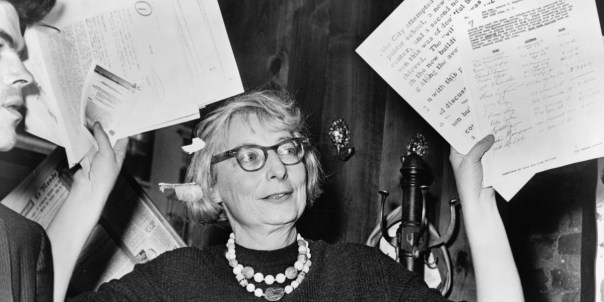
Another documentary so I started out with three. I guess I am still mourning the end of the Hot Docs festival. This film was about Jane Jacobs the recently deceased urban activist who killed several expressway plans in Manhattan and the Bronx and then moved to Toronto in time to help stop the Spadina expressway. The director is a lapsed architectural journalist who was once in love with the whole 60’s move toward building expressways and high rises particularly those developed by Le Corbusier. Jacobs was a Manhattan journalist mother and housewife who lacked formal education but who saw urban settings in a completely different way. She was horrified at the plans of NYC’s Robert Moses who led the process of knocking down old slum areas and replacing them with monstrous high rise buildings to house the poor and lower classes. While the slums were not okay in themselves they did function on a human scale and were living spaces people had turned to their own purposes. The new buildings killed that and took away the opportunity for people to share their lives and enterprises. She wrote her first book “The Life and Death of Great American Cities” to make her argument and it came out at a critical time. Moses the chief city planner for NYC was planning to build a freeway through Washington Square and Greenwich Village and right through Jacob’s neighborhood. Moses had gone far beyond knocking down slums and was now knocking down neighborhoods. Too much!! She raised the alarm and stopped him. The film follows these early days of her campaigns to the point where she ultimately caused Moses’s resignation. This film will teach you a great deal about city planning and how to look at our cities and the place of neighborhoods in preserving their life and vitality. It is bit disappointing if you are interested in learning about Jacobs and her Canadian contributions but it will give you a sense of how lucky Toronto was to inherit her and her family when we did. An excellent Q and A with the director and producer afterwards and David Crombie – our tiny perfect mayor – was present for the screening and given a big hand for his role in preserving our neighborhoods. As one looks at the condo development in Toronto recently the same questions Jacobs raised in the 60’s and 70’s might well be asked again.

The Sixth Beatle, Director – Tony Guma and John Rose

6thbeatle_02

I was uncertain about this film but it turned out to be hugely entertaining. The directors are two Americans who had a band in the 80’s that never really amounted to much but in the course of trying to make it they encountered Steve Leach, a Liverpool based band promoter who told them he was the one to discover and originally promote the Beatles. While they took all this with a grain of salt at the time, they decided to revisit the story many years later. As they started to track down Leach and do some research they realized they were on to a real story. The title of the film comes from the often used “fifth beatle” that has been applied to Pete Best – the first drummer for the group, Brian Epstein – the first major promoter, or George Martin – their record producer. Steve Leach turns out to be a major Liverpool promoter who was behind many of the Mersey Beat bands like the Searchers, the Swinging Blue Jeans etc. He and another promoter Allan Williams booked the band into local clubs but did not have the connections to take them to London and beyond. Brian Epstein took the band away from Leach in the early 60’s and had the money to give them the opportunities they needed to become the huge success they became. Nonetheless it all might have fallen apart without the support and work that Leach and Williams and Pete Best’s mother gave them at the very start. The charm of the film is the interviews with all these ageing Liverpool characters and Liverpool itself. Leach and Williams were funny and not at all bitter about losing out on the huge success. Another surprise is Pete Best who contributed so much to the film and the early success of the band but who was unceremoniously dumped by Epstein in favour of Ringo, another local drummer who was not nearly as talented. Best is also over the bitterness so the film is not angry at all but rather an interesting and charming story of the early days of the Beatles and the Mersey Beat.

Karl Marx City, Directors – Petra Epperlein and Michael Tucker

karlmarxcity_01

Opening day at TIFF16. Instead of attending a Gala some of us attended some smaller openings like the world premiere of Karl Marx City. This is a documentary about communist rule in East Germany and the STASI, the East German security organization that spied primarily on its own citizens, literally all of them. It was also about the impact of the sudden dropping of the Berlin Wall and how that dramatic change affected lives in the East and not always in positive ways. I think that was one of the most revealing messages of the film.  Not that the communists were okay by any means but that ordinary people get used to life if it is not too interruptive of their lives and the disruption of sudden change can be devastating. The film explores these themes through a very personal story. The director was born and raised in East Germany and left to live in the US. One Christmas not long after the fall of the Wall, she learns that her father has committed suicide. No one can really understand his reasons and he left no note or explanation except one. Shortly after hearing the news of the suicide, the director received a letter from her father sent just days before he killed himself. It is very short and cryptic but might represent a clue. She returns to Germany and decides to document her search for the reasons for his decision. The ensuing search reveals much about life in East Germany before and after the unification with the West and a great deal about the STASI and the impact it had on the lives of East German citizens. She learns a great deal about her father but nothing to really explain his suicide. That might be frustrating for some but the truths revealed about an oppressive regime and how its people dealt with it during and after its demise is enlightening. A very good documentary that will leave you thinking about our current very observed daily lives. I will be off to see Oliver Stone’s film about Edward Snowden in a day or so and will see some of these same themes I suspect from an American perspective.

Zimbelism – Directors, Matt Zimbel Jean-François Gratton

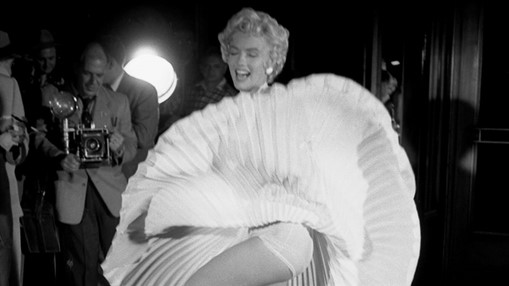
Last film of the week and one of the best. This tells the story of George Zimbel, one of the best known and talented street photographers of our time. The image here is of the classic series he did of Marilyn Monroe but he also known for pictures of John Kennedy and many other iconic images of the 20th century. We meet the photographer himself and his very strong opinions of his work and his efforts to protect it. He still uses film not digital photography and lives in his dark room perfecting his work. He has strong opinions about what he calls the digital diarrhea of the new cameras that takes away the latent talent of the photographer’s eye. He is a street photographer and few of his images are ever posed. Many do not know they are being photographed and that occasionally has created issues for him around privacy laws. The film also traces his conflict with the New York Times over ownership of his Kennedy pictures which he licensed the Times to print but not own. The exchange of correspondence between him and the New York Times lawyer are classic. I could not help thinking of another film: Finding Vivian Maier. In 2012 at TIFF this documentary traced the work of Vivian Maier who was also a street photographer but who remained totally anonymous until long after her death. She did not work in the dark room and her film developed in local shops and put it away so no one ever saw it until is was accidently discovered after her death. It brings to mind Zimbel’s comment that the art of photography is very much in the eye of the photographer and also that I like street photography very much. Both films are very good and should be seen together I think.

Tower – Director, Keith Maitland

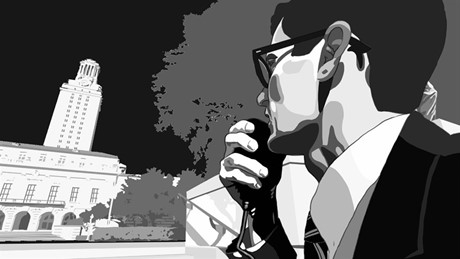
Again this is film I attended sort of at random. I had vague memories of the events covered but only after getting into the film did I see this as one of the first and worst mass shootings in recent US history. It occurred in 1966 at the University of Texas at Austin in which a single sniper took a high powered rifle to the top of the highest tower on campus and began indiscriminately targeting students and others on campus. In just over and hour and a half he killed 16 and wounded 36. The film uses animation to reenact the events, film footage from the time and interviews with some survivors and police who intervened. No one was ready for this kind of situation and those who acted to take down the killer were brave and somewhat foolhardy but successful in the end. The story is dramatic and makes no overt comment about gun control or ties to mass murders in more recent times but it doesn’t really need to. Taking us into the situation and reaction of the participants and victims is all that is necessary. A very interesting film that takes you into the heart of the first tragedy of its kind.

The Last Laugh – Director, Ferne Pearlstein

The Last Laugh is a study on whether or not you can make fun or have a laugh about likely the most unfunny thing ever: The Holocaust. Drawing on many great Jewish comics including Carl Reiner and Mel Brooks to Sarah Silverman, the film explores whether or not there is anything funny about this human tragedy but also looks at how and when you can be funny about any similar event from the Inquisition (remember Monty Python?) to 9/11. Although there are many opinions and some great jokes the consensus seemed to be that the you can laugh at or with the people caught up in the events of that time but you can’t make light of the event itself. The movie draws on scenes from Hogan’s Heroes which starred Robert Clary a holocaust survivor and French actor to Seinfeld’s Soup Nazi to The Producers. Lots of laughs at the Nazi’s primarily but not at their victims or the event itself. I was struck however at the one person in the film who is not an entertainer but rather an activist Renee Firestone who strives to keep the memory alive. She is a survivor of Auschwitz, and elderly woman who is very articulate but not bitter. She laughs occasionally as she tells stories of her days in the camp and brings a humanity to the situation that opens the door to looking at the humour that existed even among the Jews caught up in the horror. It is a fascinating study and a side of many of the comics featured in the film that you might never see otherwise. I highly recommend it.

The Father, the Son and the Holy Jihad – Director, Stéphane Malterre

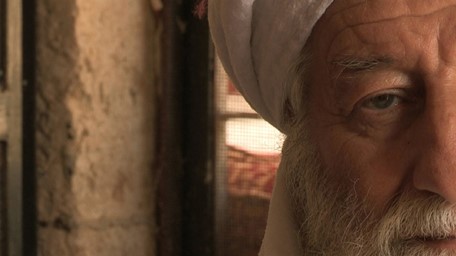
I chose this film at the last moment as I had time between two others I had pre-booked. I am glad I did because I learned a lot about Islam and jihad and what motivates those who choose to fight in the Middle East. The film follows the lives of a muslim family in France and in the first place one of their sons who becomes radicalized and returns to the family home in Syria as the civil war in that country started. He goes to fight against Assad and joins the rebels as opposed to ISIS and finds himself in the middle of a confusing and vicious war where the good and bad are hard to distinguish. He is soon seen as an enemy of both the Assad regime and ISIS both of whom want him dead and they ultimately get their wish. The father who supported his son’s decision realizes with his death that he must take up the struggle. He goes to Syria to follow his son and continue his son’s work. He becomes a major leader in the rebel forces but he is also haunted by the fact that his son’s body is missing and buried by his enemies in an unmarked grave. His final ambition is to find his son’s body and have it buried in the family estate which had been in the family for hundreds of years. It is a remarkable story and while many are not enthusiastic about jihadi thinking you will come a long way to understanding the thinking and context from which it arises at least in this case.

Norman Lear – Directors, Rachel Grady and Heidi Ewing

Do you remember All in the Family, Maude, The Jeffersons, Fernwood Tonight, Mary Hartman among many many other classic TV shows? If you do and you loved them then you will love this movie about the genius who created them all. Norma Lear is now 93 years old and long retired but still as active and vigorous as ever. This documentary was special as it follows the career of a man who pushed the boundaries of what television could do and opened it to political and social issues long felt to be taboo for broadcast TV. Interviews with Jon Stewart, George Clooney and Rob Reiner are interspersed with clips from his more memorable programs to give you insight into one of the most creative minds in broadcasting. Now 93 he still gives generously of his time. The interviews he does for the movie are great but the real thrill, and why I go to festivals like this, was his presence by Skype for a Q and A after the film. Unlike Werner Herzog who couldn’t be bothered to hang around to talk to audiences because he is just too important (sorry I had to get that dig in) Lear gave generously of his time and answered the audience questions with wit and wisdom. A great time was had by all.