Category Archives: Good

Black Code, Director — Nicholas de Pencier

blackcode_03

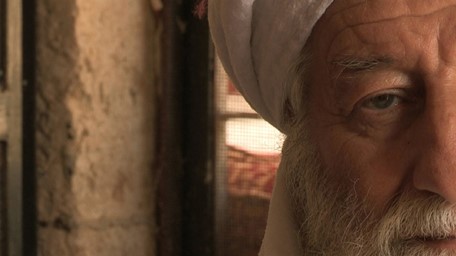
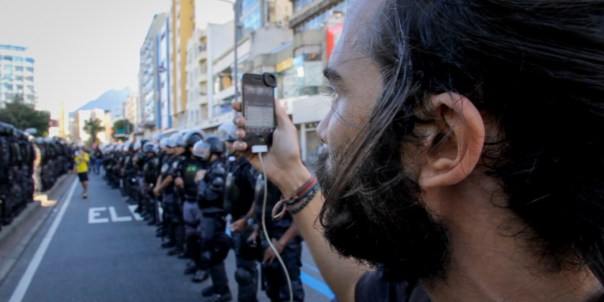
Black Code is a Canadian documentary about the Internet and mass surveillance. The film makes it clear that it is not all bad but it is definitely not all good either. The Internet and access through multiple devices including phones, tablets and PC’s has changed how much we know about what is happening in the world. The film takes images from exiled Tibetans and riots and protests in Brazil. Police brutality and spreading the truth about oppression in Tibet are quickly available around the world. At the same time however, those who want to hide from their crimes: police and oppressive regimes, use the same technology to find and arrest or do much worse to the protesters. The spread of this kind of surveillance has of course spread to the whole world as revealed by Edward Snowden and Julian Assange. The film being Canadian focuses on Ron Deibert the director of the Citizen Lab at the University of Toronto’s Munk School of Global Affairs. This small group of hacktivists has been responsible for monitoring the use and abuse of the Internet. I liked the movie very much and learned a great deal. When I compare it to Werner Herzog’s empty and pointless Lo and Behold there is nothing to say. This film is just far far superior, far far more intelligent, far far more insightful, just far far better. There – got another dig in at one of the world’s most overrated directors. So if you want to learn about the Internet and its impact on society see this good Canadian Doc when it is released later this year.
La La Land, Director – Damien Chazelle

la-la-land

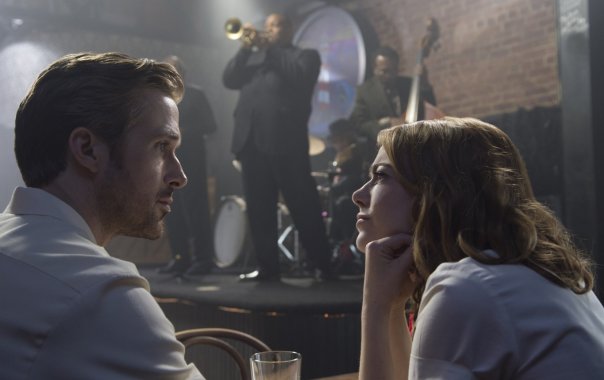
So I will start this review with a confession. I really am not a fan of musicals. Some, like An American in Paris or West Side Story get past my prejudices but most do not. I chose this film because there is lots of buzz about it and to be fair it is very well done. The other reason I chose this one is that the director also did Whiplash last year which is a very powerful film and not a musical. It was tough and polished and so I thought I would give this a chance. My verdict is that this is a very good movie, if you like musicals and romantic stories. If either or both of these are not your game stay very far away. Still, again to be fair, the two leads, Ryan Gosling and Emma Stone turn in great performances. But… the somewhat twist ending really made me gag which, if you like romantic twists, will endear the film to you and have you leaving with a smile and wee tear in your eye. Yes its like that. I will say one thing. The film has some very good jazz in it and is built around the lead’s love of jazz to some extent just not nearly enough for me. Attend at your own risk unless, like I say, you love that sort of thing. Okay one more kick at the can. The film has great cinematography and set design. Use of colour is great as well and it is a real homage to the Hollywood musical of the past but moved into the 21st century film technology. The music and dancing (and it’s a musical after all) I found to be forgettable but its all about the story right?

Citizen Jane: Battle for the City, Director – Matt Tyrnauer

citizenjanebattleforthecity_01-1

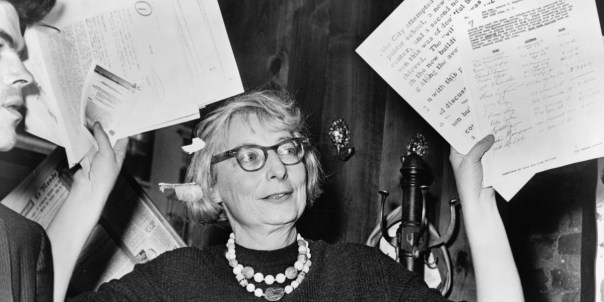
Another documentary so I started out with three. I guess I am still mourning the end of the Hot Docs festival. This film was about Jane Jacobs the recently deceased urban activist who killed several expressway plans in Manhattan and the Bronx and then moved to Toronto in time to help stop the Spadina expressway. The director is a lapsed architectural journalist who was once in love with the whole 60’s move toward building expressways and high rises particularly those developed by Le Corbusier. Jacobs was a Manhattan journalist mother and housewife who lacked formal education but who saw urban settings in a completely different way. She was horrified at the plans of NYC’s Robert Moses who led the process of knocking down old slum areas and replacing them with monstrous high rise buildings to house the poor and lower classes. While the slums were not okay in themselves they did function on a human scale and were living spaces people had turned to their own purposes. The new buildings killed that and took away the opportunity for people to share their lives and enterprises. She wrote her first book “The Life and Death of Great American Cities” to make her argument and it came out at a critical time. Moses the chief city planner for NYC was planning to build a freeway through Washington Square and Greenwich Village and right through Jacob’s neighborhood. Moses had gone far beyond knocking down slums and was now knocking down neighborhoods. Too much!! She raised the alarm and stopped him. The film follows these early days of her campaigns to the point where she ultimately caused Moses’s resignation. This film will teach you a great deal about city planning and how to look at our cities and the place of neighborhoods in preserving their life and vitality. It is bit disappointing if you are interested in learning about Jacobs and her Canadian contributions but it will give you a sense of how lucky Toronto was to inherit her and her family when we did. An excellent Q and A with the director and producer afterwards and David Crombie – our tiny perfect mayor – was present for the screening and given a big hand for his role in preserving our neighborhoods. As one looks at the condo development in Toronto recently the same questions Jacobs raised in the 60’s and 70’s might well be asked again.

Karl Marx City, Directors – Petra Epperlein and Michael Tucker

karlmarxcity_01

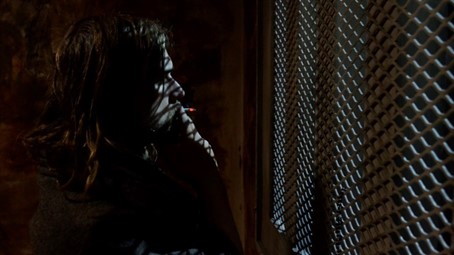
Opening day at TIFF16. Instead of attending a Gala some of us attended some smaller openings like the world premiere of Karl Marx City. This is a documentary about communist rule in East Germany and the STASI, the East German security organization that spied primarily on its own citizens, literally all of them. It was also about the impact of the sudden dropping of the Berlin Wall and how that dramatic change affected lives in the East and not always in positive ways. I think that was one of the most revealing messages of the film.  Not that the communists were okay by any means but that ordinary people get used to life if it is not too interruptive of their lives and the disruption of sudden change can be devastating. The film explores these themes through a very personal story. The director was born and raised in East Germany and left to live in the US. One Christmas not long after the fall of the Wall, she learns that her father has committed suicide. No one can really understand his reasons and he left no note or explanation except one. Shortly after hearing the news of the suicide, the director received a letter from her father sent just days before he killed himself. It is very short and cryptic but might represent a clue. She returns to Germany and decides to document her search for the reasons for his decision. The ensuing search reveals much about life in East Germany before and after the unification with the West and a great deal about the STASI and the impact it had on the lives of East German citizens. She learns a great deal about her father but nothing to really explain his suicide. That might be frustrating for some but the truths revealed about an oppressive regime and how its people dealt with it during and after its demise is enlightening. A very good documentary that will leave you thinking about our current very observed daily lives. I will be off to see Oliver Stone’s film about Edward Snowden in a day or so and will see some of these same themes I suspect from an American perspective.

The Father, the Son and the Holy Jihad – Director, Stéphane Malterre

I chose this film at the last moment as I had time between two others I had pre-booked. I am glad I did because I learned a lot about Islam and jihad and what motivates those who choose to fight in the Middle East. The film follows the lives of a muslim family in France and in the first place one of their sons who becomes radicalized and returns to the family home in Syria as the civil war in that country started. He goes to fight against Assad and joins the rebels as opposed to ISIS and finds himself in the middle of a confusing and vicious war where the good and bad are hard to distinguish. He is soon seen as an enemy of both the Assad regime and ISIS both of whom want him dead and they ultimately get their wish. The father who supported his son’s decision realizes with his death that he must take up the struggle. He goes to Syria to follow his son and continue his son’s work. He becomes a major leader in the rebel forces but he is also haunted by the fact that his son’s body is missing and buried by his enemies in an unmarked grave. His final ambition is to find his son’s body and have it buried in the family estate which had been in the family for hundreds of years. It is a remarkable story and while many are not enthusiastic about jihadi thinking you will come a long way to understanding the thinking and context from which it arises at least in this case.

How to Let go of the World and Love all the Things Climate Can’t Change – Director, Josh Fox

Okay – I am a bit focussed on climate change and this year’s festival gave me many opportunities to indulge my obsession. Josh Fox, the director of this film also directed one of the more recent and important climate change films Gasland. So I figured this one had to be good. It starts from him noticing that a tree he planted in his home community as a child is dying and he wants to understand why. The question sends him on a trip around the world to see how the places and things that people treasure are being lost as a direct result of climate change and its effects on their homes and countries. The stories are heart wrenching but the responses of the people affected are encouraging. It turns out that the things climate can’t change are our ability to react and fight against those that would continue the assault on our world. He documents many of these struggles from individual acts to community resistance. The film does help those of us who are really depressed about what is happening to see the possibility of change and perhaps a way toward saving what we have left. Uplifting.

Chasing Asylum – Director, Eva Orner

Another good example of how we are challenged by climate change. In this case the film is about South Asian and Middle Eastern refugees who are fleeing to Australia to escape famine, drought and war. Unlike Canada and Europe however the Australians throw up legal and inhumane obstacles to these people. The film documents the clear efforts of a series of Australian governments to deny entry to these refugees and to try and deny that they are anything but refugees. They force them to move to horrendous concentration camps which they call detention centres on isolated islands north and east of Australia. The living conditions are intolerable and the detainees suffer from physical and mental illness brought on by and intensified by the living conditions. In true democratic spirit it is illegal to film in these camps and anyone working there who blows the whistle is subject to criminal prosecution and imprisonment. The director and film crew that put this together filmed suruptiously and interviewed social workers and others anonymously. It was a brave film to make and the participants even braver. The film is made by Australians who were present for a Q and A afterwards. They are deeply ashamed of their country and their fellow countrymen who are complicit in the actions of their government. One of the saving graces of the story was an interview with the former prime minister Malcolm Fraser from 1975-83. He was the last prime minister to look on immigration as a positive thing and who strongly condemned the policies of his successors. Unfortunately he died shortly after the film was completed but appeared to be one of the only sane voices left in the country.

A very powerful film that is not uplifting or particularly hopeful but which does may you feel better about Canada.

Bobby Sands: 66 Days – Director, Brendan Byrne

In 1981, during the height of The Troubles in Northern Ireland a young IRA recruit, Bobby Sands, was arrested for the second time and placed in the notorious Maze Prison on an arms possession charge. While there he and the other prisoners argued that they were not criminals but rather political prisoners and should be treated differently. In previous years the British government had allowed these prisoners special status in terms of the conditions of their imprisonment but Margaret Thatcher had revoked these and put harsh conditions in place. To protest this treatment and draw attention to the IRA’s demands, Sands decided to sacrifice himself and went on a hunger strike. Ten other prisoners joined him and for 66 days he held the attention of the world as he slowly declined and ultimately died from starvation. Several more of the other hunger strikers also died until the British relented under public pressure and lifted the harsh conditions for the prisoners. His actions brought attention to the conflict generally in Northern Ireland and to the manner in which the British chose to suppress it. The film uses actors, newsreel footage and interviews with survivors and others who were present at the time as fellow members of the IRA, British police and others. It is an objective enough picture but clearly paints a positive one of Sands himself.

I confess I am of many minds about this film. While many want to point to Sands’ courage and initiative in giving up his life for his cause, it is his cause that one has to question. The Catholic population in Northern Ireland were isolated and in a minority but they were hardly in need of the kind of terrorist campaign the IRA waged. 3500 innocent people were killed by the IRA during their so-called war. They themselves suffered little as they cowardly shot unarmed women and children and planted bombs that they triggered from a safe distance. During Sands’ hunger strike some innovative IRA types thought it would be great to have him run in a by-election for a Northern Ireland seat in the British House of Commons. He won of course but on the day of the election some brave IRA gunmen knocked on the door of a house in Belfast and shot an unarmed mother dead for the crime of helping collect census forms. That I should praise Sands’ for his courage defending these terrorists is beyond me. On the other side however, his death brought attention to the fact that the British and Irish both had done nothing to resolve the conflict. Over the next nearly 2 decades slow action was taken to bring peace to the situation which meant reconciliation among the IRA and the equally abhorrent Ulster Defence League. The real courage was with the relatives and friends of the victims of the conflict who were able to forgive or forget what had taken place. Still as you can see the film makes you think and also to be fair does not shy away from labelling the crimes of the IRA. Worth a watch in this reviewer’s opinion.

Bottle Rocket – Director, Wes Anderson


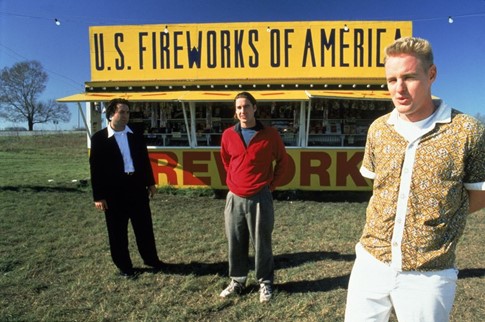
I have now seen all the Wes Anderson films who is one of my favourite directors. Bottle Rocket is old – well 1996 – and puts together the Wes Anderson team that includes Owen and Luke Wilson. The story is odd and off the wall but lots of fun. You can see in this movie Anderson’s use of colour and framing that make most of his films really beautiful to look at while remaining totally odd and weird. Owen Wilson’s acting style is also a great part of the film. It tells the story of a trio of young men who have a career goal of becoming master thieves. They start small in a hilarious robbing of a local bookstore for a few hundred dollars and basically stay small until they join up with a real crook played by James Caan. This last caper turns into a sad but very funny ending to their ambitions. If you are also a Wes Anderson fan and have not seen this yet – it is highly recommended.

By the way, Bottle Rocket is based on a short that is Wes Anderson’s first film to win awards at a small US film festival. You can see it on YouTube here:

The 33 – Director, Patricia Riggen

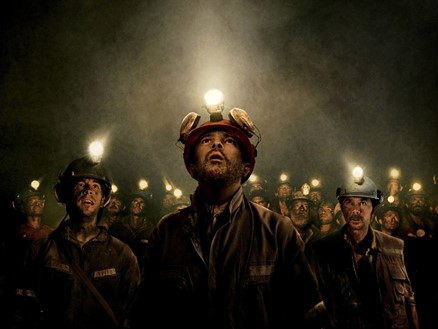
This movie got mediocre reviews and I think I understand why. It tells the story of the 33 Chilean miners trapped for 69 days underground and finally miraculously rescued. It was a dramatic story that captured the attention of the world for over two months and brought in mining and drilling experts from all over the world including Canada. The making of a movie about the events made sense and I recall listening to a radio documentary about the making of the movie a couple of years ago that piqued my interest in the film and learning that Antonio Banderas and Gabriel Byrne were in the cast. The film, if it had been made as a fictional story would perhaps have garnered more praise. Unfortunately, the real story while dramatic is also disturbing.  Despite all the attention, the company that owned the mine was never punished for creating the unsafe conditions that led to the disaster and the minors were never compensated for their trauma. The film touches on these issues but never really focuses on them. Instead we focus entirely on the rescue in a pretty typical Hollywood manner. There are some interesting characters among the miners and there is some real tension. One of the best scenes is the final rescue as the minors are pulled one by one from the mine. I enjoyed the movie and am just disappointed that they didn’t do a better job.