
If you liked the original Blade Runner you will love this sequel. Set decades after the first film you will find the dystopic future has not improved much. This time however our hero is Canadian actor Ryan Gosling and his director is also Canadian which in itself makes this a must see for all us north of Trumpland. Villeneuve clearly was a fan of the first film and his recreation of the world first dreamed of by Philip Dick in Do Androids Dream of Electric Sheep, is perfect in every way. What is really special is that that the story extends the themes and takes us in some new directions. To tell more would be to spoil what is a great story. This movie I think should have had a Best Picture nomination but instead we get 5 nominations for technical awards such as cinematography and editing. While this film definitely deserves these nods I think the nominators missed out on what is a very special film with a great story to tell. Nonetheless for quality production values and a really fun ride (and as a huge fan of the original) I cannot recommend this movie more highly. May it be blessed with some well deserved wins unlike its predecessor.
A comment – while some movies win awards and are celebrated over others, it is often the case that those winning films are long forgotten while movies that won nothing at the time are the enduring ones. Blade Runner is such a movie. Nominate for only two technical awards in 1983 and losing both to E.T. and Gandhi, I suspect Blade Runner will endure as a classic. While E.T. might also endure I would ask those reading this blog to put up their hands if they have even seen Gandhi or will ever see it again. See? No one. LOL.



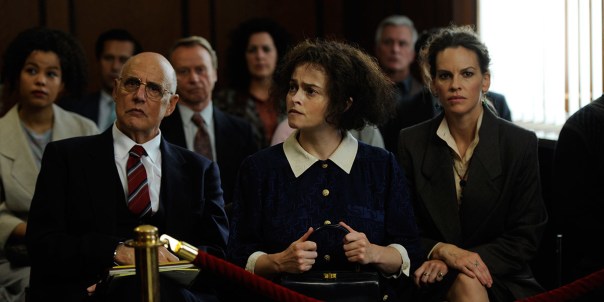 This was the last film of the week for this reviewer and tied up the whole 10 days very well. Like Three Christs, it explores the issues around how we deal with mental illness based on real events. Three Christs was based on experimental treatments tried in 1959 and this one is based on a key legal case in 1985 that ensured that patient rights respected for those with physical illness to those suffering mental illness. The case focussed on one woman who, in frustration with her treatment, arranged for a lawyer. She lucked into a crusading woman lawyer who made major personal sacrifices to defend her and ultimately win her case. Helena Bonham Carter plays the patient who suffers from a variety of physical illnesses and is mentally disabled but not psychiatrically ill. She is mistakenly diagnosed as schizophrenic and treated brutally in the hospital. Her lawyer is played by Hillary Swank and both Carter and Swank turn in exceptional performances. Over the course of the story the two become friends and learn great respect for one another and ultimately are successful in establishing basic rights for mental patients in the US. I found the film very moving and am certain that Carter is due for an Oscar nomination and maybe a win for her performance. Some critics have been less enthusiastic about the movie because they feel it fails to raise enough anger about how people in the mental health system in the US are treated. We were lucky to have the director, Carter, the writer, and the two actual lawyers who fought the case and are still fighting for patient rights in the US present for a Q and A after the movie. They made it clear that they wanted to tell the story of the friendship between the two leads and in this they were more than successful. It is too bad that the critics in question did not listen to the filmmakers. This is an Oscar worthy film – no question.
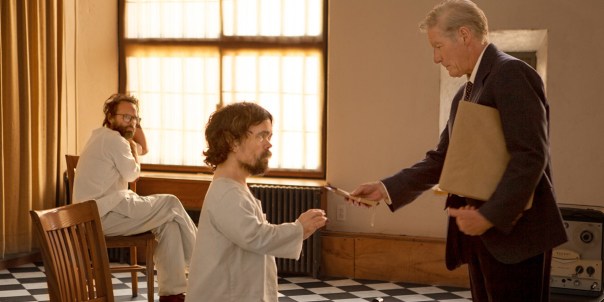 I confess I chose this movie largely to see Tyrion Lannister in a mental hospital. Well not entirely but that was certainly a factor. The story was intriguing however. The film is based on real events that happened at the Ypsilanti mental hospital in 1959. Treatment of frequently violent paranoid patients was limited to electroshock therapy, sedation and other somewhat horrific methods that were essentially intended to punish and control rather than treat. Gere plays a psychiatrist who wanted to take an alternative and innovative psychotherapy approach. He is resisted but has enough support to start his experimental method. The three men are brought together and the film documents their interactions and the effect they have on one another including Gere who begins to identify with them largely because he comes to respect them and befriend them. The cast is excellent and I totally forgot Tyrion in favour of Dinklage’s new character so a score for him to escape type casting as a dwarf from a mythical kingdom. Gere and the director were there (on a Friday at TIFF!!) to do a Q and A after the film. Gere was very eloquent and articulate about the film and its impact on him as an actor. Since the film was based on real events, the script worked with the actual recordings of the sessions held with the three Christs which added to its power. I found the film very moving in parts and it evoked some leaky eyes including my own. Worth a watch.
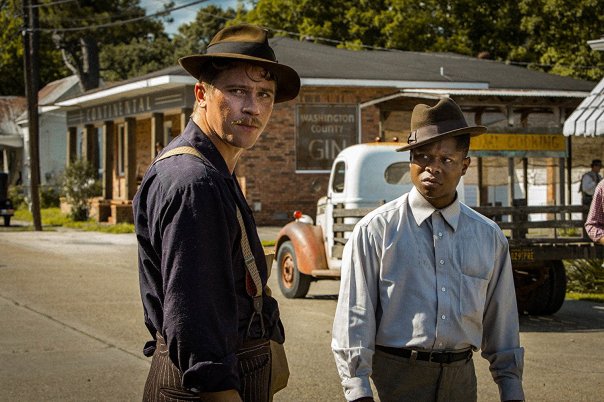 I had mixed feelings about this movie. It is a powerful film full of stories about many different people. The main focus is on two men who return to their homes in Mississippi after serving over 4 years in the Second World War. One is black and served as a tank commander, the other white and served as a bomber pilot. Both suffer from some form of post traumatic stress. They return to a viciously racist society that they had left behind when they were in Europe. On their return they bond over their previous war experience and the feeling of being cut off and exiled in their country and their homes. But there are several other stories going on in support of these two. All the stories are good and well done but to be honest there is just too much for a movie like this. After a while the movie started to drag and became hard to watch. In the end, and although the ending is not tragic, thank God, I was exhausted. Dee Rees was there for the Q and A and was articulate and helpful in understanding the overall story. She admitted that the story was huge and that she wanted to blend many aspects of life at the time for blacks and the poor white farmers and the omnipresent racist tensions. So… a good movie but sadly flawed by over-reaching.
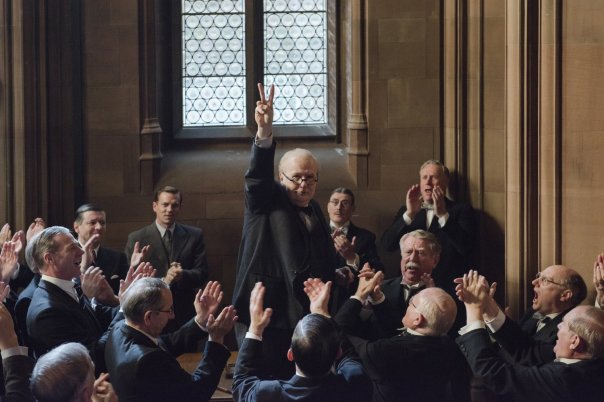 Darkest Hour is a film about the rise of Churchill as the war with Hitler reached a crisis; Great Britain’s darkest hour. With the German army overwhelming Europe and driving the British Expeditionary Force of 300K men to the beaches of Dunkirk, many politicians wanted to sue for peace and basically hand victory to the Nazi’s. There were however many who opposed that solution and Churchill, who was not the most popular politician, was their chosen leader to replace Neville Chamberlain. Darkest Hour follows this transition and the rescue of the expeditionary force from Dunkirk. Gary Oldman plays Churchill in what has to be an Oscar worthy performance and as Eli Glasner suggests, so should the makeup artist. You will not recognize Oldman except maybe his eyes. The film is done with humour, and modesty and does not overwhelm the audience with chest beating heroism. The script is smart and the rest of the supporting cast are great. Although we all know the outcome the tension of struggle between those wanting to cut a deal with Hitler and Churchill’s unwillingness to surrender is palpable throughout. This movie will be honoured next February and hopefully you will have a chance to see it before then.
 Movies: Rants and Raves