Category Archives: Documentary

Migrant Dreams – Director, Min Sook Lee

This is a film that shook me up and embarrassed me for my ignorance about Canada’s temporary foreign workers program and how the “local” food I buy and eat is produced. Recently there was a hue and cry when it was discovered that Heinz was no longer going to buy tomatoes for its best selling ketchup from farms in Leamington Ontario and closed a bottling plant in the town that had been operating for decades putting lots of locals out of work. Loblaw’s took the brunt of the criticism when they decided to drop sales of French’s ketchup. French’s ketchup it turned out used tomatoes from Leamington. The outrage was so bad that Loblaw’s had to back off and reinstated French’s ketchup. (which actually tastes better if you ask me.) At any rate I joined in the sense of outrage at least moderately but this was before I knew what I know now. This movie paints a pretty awful picture of the industrial farming that goes on in this “Idyllic” farming community of Southwest Ontario. Huge green houses are used to grow crops and are staffed by migrant workers who are virtual prisoners of their employers. Part of the defence for the employers is that they hire through recruiting agencies and are at arm’s length from the way the workers are treated. Without getting into detail you need to see this film to understand how our national and provincial governments allow this abuse to continue. I hope you will see the movie but then go to the website and sign the petition. Here is the link: http://www.migrantdreams.ca/ and Petition

Song of Lahore – Directors, Andy Schocken, Sharmeen Obaid-Chinoy

Awesome movie!! I saw the trailer for this at a local revue movie theatre. I had seen the title and confess to being somewhat culturally dismissive. I thought I don’t really want to see a movie about Pakistani music. The trailer however changed my mind the minute I heard Dave Brubeck’s Take Five played on the sitar. Then Wynton Marsalis appeared and I was hooked. The movie when I finally went to see it was amazing. Not only for the music and the story but for the overall quality of the film editing and the insight into the stories of these musicians. Wynton Marsalis is also very good but that almost goes without saying. The story is about a group of Pakistani classical musicians who have been silenced by the Taliban and Pakistani governments who imposed Sharia Law and saw music as an evil to be suppressed. They maintain their skills and music in secret sessions until the suppression is eased but by then the audience for their music has died. They decide to reinvent themselves by incorporating Jazz into their repertoire. They post a video of their work online which is a Pakistani version of Dave Brubeck’s classic Take Five. To their surprise they get international recognition and ultimately an invitation from Wynton Marsalis to play a concert with his jazz orchestra in New York. It is an amazing success. I have posted a picture of the groups flute player here as he along with the percussionist is the best of a great group. There is a great scene where he and Marsalis’s flautist have a dueling flute solo that will blow you away. The neat thing is that the guy in the picture made his own flute from a bamboo pole which is traditional in Pakistan. The climax of the film is the concert in New York and it is filmed beautifully giving you real insight into the group itself and Marsalis’s reaction to their talent. Great stuff. It has had only limited release but deserves much wider viewing.

Rabin Rabin in his own Words – Director, Erez Laufer

When I was a high school student my father took a one-year contract position to help establish educational and children’s programming for the newly established national Israeli television broadcasting service. As a result, my family moved to Israel for a year and lived in a small village north of Tel Aviv. The year was 1966-67 so by chance we ended up being in Israel for the Six Day War (yes I am that old) my one and only chance as a Canadian to experience international conflict. To be honest it was somewhat uneventful for my family. The Israeli’s took the war to the enemy destroying their air forces on the ground and swiftly defeating the ground forces in a surprise attack to take the good ground and end the threats. Rabin was the brains behind the victory. His preparation of the Israel Defence Force and the Air Force over the years leading up to the war meant Israel was more than prepared for a war Rabin himself was convinced was coming. He then led his forces to its overwhelming military victory. It was a stunning victory but Pyrrhic to say the least. The following 50 years have been fraught including a second war and ongoing unrest both within the conquered territories and in the country itself.

While this paints Rabin as a warrior the film itself paints a far more complex picture of a leader who was convinced of the need to finish the war with an honourable peace even if it meant compromise with Israel’s enemies. He had a long and eventful political career that ended in 1995 with his assassination. He served as ambassador to the USA, Prime Minister in the 70’s during which he authorized the Entebbe raid, and again prime minister in 1992 until his assassination. During his second term he worked for peace agreements with Egypt and the PLO and lobbied against the resettlement plans of the Israeli government in the period between his prime ministerial terms. Despite his key role in defence of his country he was killed for daring to make peace. The film uses his diaries, speeches and newsreel film to tell the story of one of the 20th Centuries most remarkable leaders and arguably the greatest Israeli leader in the short history of that country. This is not only a great story but a great film that engages the viewer from beginning to end. I highly recommend it.

When I was a high school student my father took a one-year contract position to help establish educational and children’s programming for the newly established national Israeli television broadcasting service. As a result, my family moved to Israel for a year and lived in a small village north of Tel Aviv. The year was 1966-67 so by chance we ended up being in Israel for the Six Day War (yes I am that old) my one and only chance as a Canadian to experience international conflict. To be honest it was somewhat uneventful for my family. The Israeli’s took the war to the enemy destroying their air forces on the ground and swiftly defeating the ground forces in a surprise attack to take the good ground and end the threats. Rabin was the brains behind the victory. His preparation of the Israel Defence Force and the Air Force over the years leading up to the war meant Israel was more than prepared for a war Rabin himself was convinced was coming. He then led his forces to its overwhelming military victory. It was a stunning victory but Pyrrhic to say the least. The following 50 years have been fraught including a second war and ongoing unrest both within the conquered territories and in the country itself.

While this paints Rabin as a warrior the film itself paints a far more complex picture of a leader who was convinced of the need to finish the war with an honourable peace even if it meant compromise with Israel’s enemies. He had a long and eventful political career that ended in 1995 with his assassination. He served as ambassador to the USA, Prime Minister in the 70’s during which he authorized the Entebbe raid, and again prime minister in 1992 until his assassination. During his second term he worked for peace agreements with Egypt and the PLO and lobbied against the resettlement plans of the Israeli government in the period between his prime ministerial terms. Despite his key role in defence of his country he was killed for daring to make peace. The film uses his diaries, speeches and newsreel film to tell the story of one of the 20th Centuries most remarkable leaders and arguably the greatest Israeli leader in the short history of that country. This is not only a great story but a great film that engages the viewer from beginning to end. I highly recommend it.
Everything is Copy – Director, Jacob Bernstein

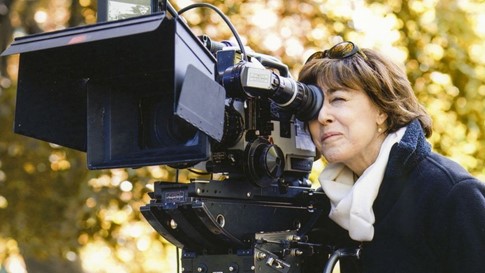
Everything is Copy is a tribute documentary to Nora Ephron, an essayist, humourist, screenwriter, and all round really interesting woman who died in 2012 of leukemia. It was made by her son Jacob Bernstein and covers really all aspects of her life from childhood through several marriages including Carl Bernstein of All the President’s Men fame. She was an iconoclastic observer of human foibles and of being a woman in a male dominated society. She took on all aspects of her life from divorce to aging to illness with an acerbic wit that attracted many to her despite the fear of being cut to the quick by her wit and observations. The film uses interviews with Ephron herself from the past as well as with the many creative film and publishing greats who knew and loved her including Carl Bernstein, Steven Spielberg, Mike Nichols, Meryl Streep and Carl Reiner among many others.

If you do not know her you need to know that she was the brains and writer behind films like Sleepless in Seattle, When Harry Met Sally, Silkwood, and Julie and Julia. All hugely successful and well reviewed. If you want to know her thoughts however read her essays and humour which are available in several books and the archives of the New York Times and Esquire. The film is one of the many HBO documentaries and can be seen on HBO on-demand channels.

All Things Must Pass: The Rise and Fall of Tower Records – Director, Colin Hanks

This documentary covers the 45 history of Tower Records, an international record retailing company that started modestly in Sacramento California and spread right around the world. From being one of the most successful retail companies in the world in 1999, they then filed for bankruptcy in 2006. A sudden and dramatic crash. The man who founded the company was Russ Solomon and he gathered around him in 1961 a variety of unusual people who liked the fact that employees could wear what they liked, let their hair grow, do drugs and charge them as a petty cash item and drink. They only had to show up for work in order to keep their jobs. He was however a great judge of people and gathered a group of people who loved music, were friendly and committed and in the end hard working in their own way. From a very humble beginning it grew to a mega corporation that really outgrew the skills and ability of its creator. The film and the archival footage of the stores reminded me of Sam the Record Man and Solomon reminded me totally of Sam Sniderman. Interestingly both companies closed within one year of each other. Sam’s started in the basement of Sniderman’s home in 1937 but opened its main store on Yonge street in 1961 the same year as Tower Records. The similarities suggest that Tower Records and Sam the Record Man were victims of the same forces and not really victims of the inability of the founders to adapt to a new reality. Nonetheless the similarities are stunning and the film is totally fun until the end when the corporatism just becomes boring and put me off as much as it did Russ Solomon. Nonetheless this is fun movie and worth your time particularly if you shopped for LP’s in the 60’s.

What Happened, Miss Simone? – Director, Liz Garbus

Okay I will confess I really like Liz Garbus. She has not made a bad documentary in her life that I am aware of including Love, Marilyn, The World Against Bobby Fischer and the Ghosts of Abu Ghraib. Go check them out if you have not seen them. This is another winner. The film uses interviews with her former husband and manager, her daughter and niece to great effect but the news footage of her and Stokley Carmichael and others is even more powerful. Nina Simone was an amazing pianist and jazz/blues singer who suffered from manic depression and who took a potentially super star career to the depths of despair as she fought against racism in the US in 60’s and 70’s. Her life was tragic but through it all her powerful voice, song writing ability and passion for her music and her community kept her alive and fighting. I cannot recommend this film more. It is nominated for Best Documentary and is up against a biographical documentary about Amy Winehouse which took the BAFTA Award this year. I don’t see it. However good “Amy” is she did not live long enough nor was she committed enough to warrant beating out this movie. In this year of ever so white Oscars they could take a mini-step in the right direction to recognize this champion of human rights and freedom.

Winter on Fire – Director, Evgeny Afineevsky


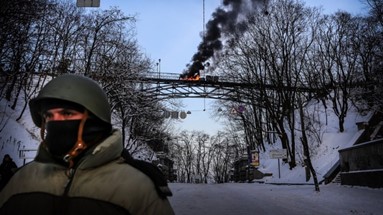
Not a great movie and likely nominated for the pro-Western political perspective it offers. The technique of the documentary is very in your face with no clear narrative but a collection of real life encounters with participants in the conflict. They include not only leaders but people in the street and so it is visceral in its impact. The director followed the style of a previous Netflix movie called The Square about the uprising in Egypt that focussed in demonstrations in Tahrir Square in Cairo. Both films take the viewer into the streets with the protestors and shows the conflict from that perspective. It is a powerful technique that builds sympathy in the viewers for those who are in the midst of the conflict. The problem in both cases is that it also simplifies the struggle going on in the country. In both situations and particularly in Ukraine the situation is not nearly as simple as it is portrayed. Ukraine is of critical strategic importance to east and west and is as a result the focus of much interference from both sides. This aspect of the conflict is not addressed in the film and so I am not entirely happy with it. I do not necessarily accuse the film makers of political propaganda but the film is of limited value because of its focus on the street alone. If you want to see better example of the technique however I would recommend The Square over this film.

Cartel Land – Director, Matthew Heineman

This is one of the 2016 Oscar nominated feature length documentaries. I recommend watching it either before or after you watch Sicario because it deals with the same topic only the real thing. The film follows two vigilante groups that are fighting the Mexican drug cartels. One is a US group of well armed men living in border towns in Arizona and the other is a group in central Mexico defending their homes and towns against the local drug gangs. The remoteness of the two areas has allowed the cartels to take over and the local populations have suffered as a result. Both areas are not adequately policed and so the citizens are on their own. Some decide to take on their own defence. The legal and moral issues that are looked at in Sicario are revealed here in stark reality. Both the cartels and the vigilantes are living in a lawless environment. While the vigilantes try to draw a distinction between themselves and those they are fighting the lines tend to blur. The moral compromising is illustrated with the occasional comments of a group of poor Mexican farmers who cook the crack cocaine and meth and grow the marijuana that the cartels sell. They are “philosophical” about it. Nothing will change and someone will do the job if they don’t. Its quite depressing to watch. A very good documentary but don’t take it from me. Rotten Tomatoes gives it 90% positive ratings and hey… it’s a Netflix production so easily available to everyone.

Very Semi-Serious – Director, Leah Wolchok

The subtitle for this HBO documentary film is: A Partially Thorough Portrait of New Yorker Cartoonists. I have to admit I am a New Yorker cartoon addict. I get the magazine every week and like the old Playboy joke – I do read it for the articles but first I flip through and read all the cartoons. To get a chance to learn how they get chosen, who draws them, and who the editor is, was a chance not to be missed. Best of all I saw it at the Bloor Cinema – home of the Hot Docs festival and the New Yorker’s cartoonist and cartoon editor, Bob Mankoff was there for a Q and A after the showing. The film took 7 years to put together and includes interviews with many of the better know cartoonists who are fascinating and often unusually strange people themselves. We learn a great deal about how the cartoons are chosen and how Bob Mankoff works with the contributors to improve and enhance their work including such factoids as: Mankoff goes through 1000 cartoon submissions a week to choose 15 to be published. He does this often by meeting with the cartoonists personally each week in his office to discuss and critique their submissions. He cares deeply about the art of cartooning and uses his job as editor to build and support the small group of active cartoonists. Cartooning is a slowly dying art with fewer publications publishing them each year. To ensure the continuance and renewal of the art Mankoff deliberately works with younger contributors who will hopefully replace the current old timers like himself. He has been remarkably successful. The Q and A after the film was brilliant with Mankoff being a sharp and witty in person as he is on the pages of the New Yorker. If you are a fan you can also read his book titled after one of his more iconic cartoon captions: How about never. Is never good for you?

Women He’s Undressed – Director – Gillian Armstrong

This is a truly great documentary about Orry-Kelly who is perhaps the most influential costume designer of his time — the golden age of Hollywood. He was Australian from a small rural town and the most unlikely to end up where he did. As a costume designer he worked on over 250 films including Casablanca. Some Like it Hot, Irma la Douce and An American in Paris. He won three Oscars and worked for MGM, 20th Century Fox and Universal Studios. He dressed Marlene Dietrich and Betty Davis and Marilyn Monroe and of course did the gowns for Jack Lemmon and Tony Curtis in Some Like it Hot. His sense of design allowed him to make the careers of many female stars of his time.

He was also gay and had a long term relationship with Cary Grant and shared the lifestyle with many other stars and artists of the time including Randolph Scott among others. However being gay was illegal and increasingly frowned upon by the industry leading to Grant and others having to abandon their obvious lifestyle and even getting married to cover the reality of their lives. Orry-Kelly was not so willing to cover his real life. It led to the end of his relationship with Grant but he moved on and found another lover who was not in the business and who he kept secret.

The documentary uses an actor to play the role of Orry-Kelly as a narrator which works very well as well as some great scenes from his movies and interviews with other costume designers, directors and film critics who know his work and aspects of his life. The Director, Gillian Anderson introduced the film and told us not to leave before the credits run since she inserted a final scene in the middle of the credits. The last scene of the film before the credits tells us that Orry-Kelly wrote a tell all memoir that has been repressed and prevented from publication by Cary Grant. The manuscript was lost. However Gillian Anderson made a great effort to track it down and in the final final scene inserted in the credits we learn that the manuscript was with his mother in Australia and is still in the hands of the family. One can only hope that the legal obstacles can be overcome so we can buy the book. Apparently it is available there but I can’t see how to get it shipped to Canada. Rats!!!

At any rate this is a great film, funny, interesting and educational all in one. Go for it.

http://tiff.net/festivals/festival15/tiffdocs/women-hes-undressed